What Happens After the License Plate Reader Gets a Hit? The Missing Layer in Every Real Time Crime Center
Real time crime centers are changing the way law enforcement detects crime. However, without real time crime center case management, agencies often struggle to turn alerts into structured investigations and prosecutable cases.
License plate readers identify a suspect vehicle in minutes. Facial recognition matches a face from a camera feed to a known offender. A social media monitoring tool flags a threat before it materializes. An analyst watching a live CAD feed spots a pattern connecting three incidents from the past week and gets a patrol unit moving before the next 911 call comes in.
The technology works. Agencies investing in real time crime centers are solving cases faster and catching suspects they would have missed entirely.
But there is a question almost nobody is asking: what happens next?
The Hit Is Not the Case
A license plate reader generates an alert. A facial recognition system surfaces a name. An analyst watching live feeds spots a pattern connecting three recent incidents.
That is intelligence. It is not yet an investigation.
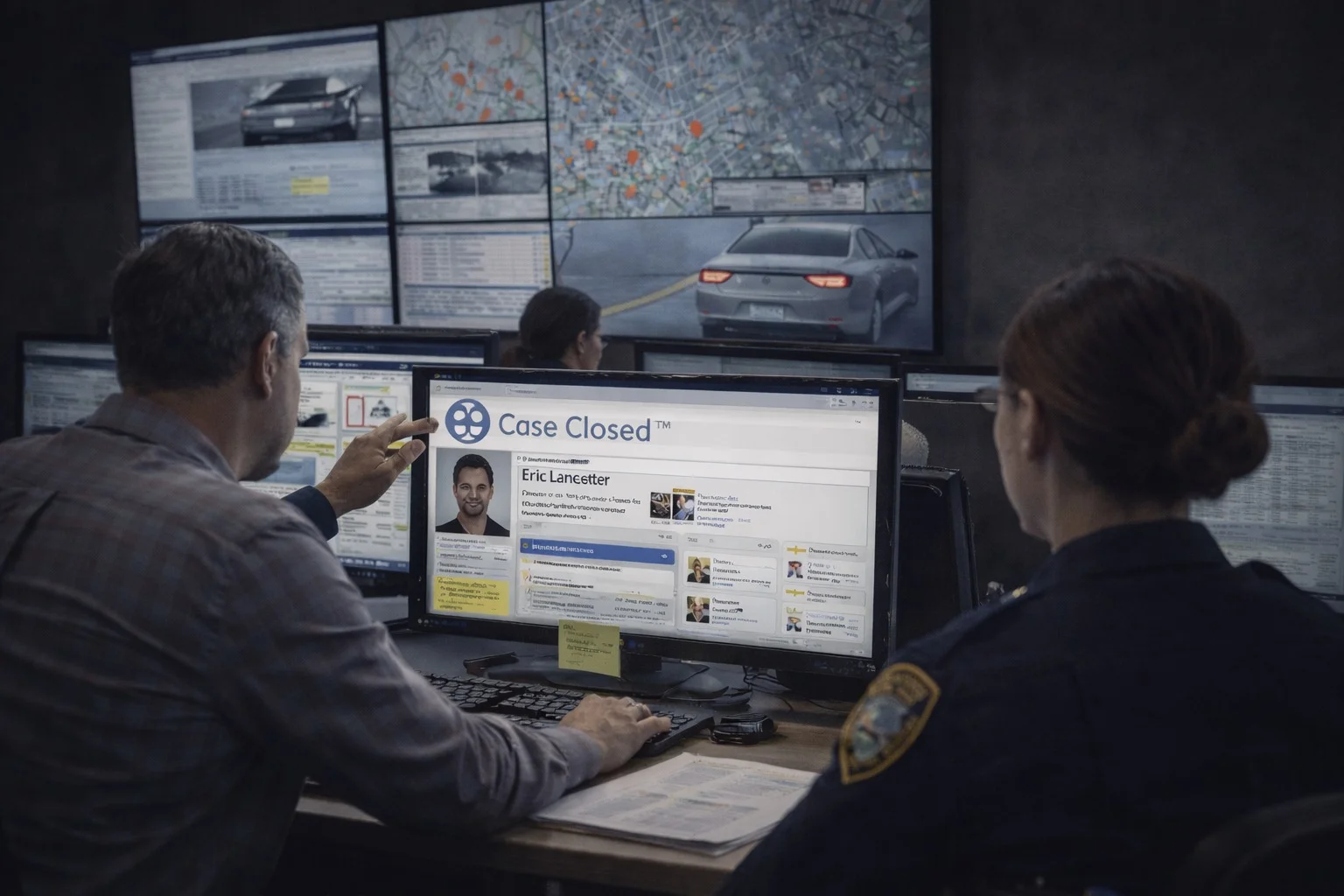
Without real time crime center case management, the next step is often unstructured. For an investigation to begin, someone has to document the information, assign it to a detective, connect it to prior tips and cases, and build a record that can withstand legal and operational scrutiny.
In most real time crime centers today, that step is informal at best. The analyst sends an email. A detective gets a text. Someone updates a shared spreadsheet. A note gets added to a CAD record that was never designed to hold investigative information.
The surveillance technology is state of the art. The investigative infrastructure behind it is not.
The Problem Gets Worse Over Time
A real time crime center that has been operating for a year has generated thousands of alerts, hits, and intelligence leads. Some led to arrests. Many did not. Most of the ones that did not were filed away in someone’s inbox or simply forgotten.
Without real time crime center case management, agencies cannot track how these leads connect over time.
What no one knows is how many of those unfollowed leads were connected to each other. The vehicle that appeared near a homicide in January. The same plate that appeared near a break-in in March. The social media profile flagged in February and never formally documented.
Without a shared searchable entity database, those connections are invisible.
Real time crime center case management ensures that all data is structured, searchable, and connected across time.
The Compliance Problem Nobody Is Talking About
Real time crime centers pull data from multiple sources:
- License plate readers
- Facial recognition systems
- Social media monitoring tools
- Gunshot detection sensors
- State and federal databases
A significant portion of this data qualifies as criminal intelligence under 28 CFR Part 23.
Without real time crime center case management, agencies risk failing to meet compliance requirements such as:
- Documenting reasonable suspicion
- Maintaining retention schedules
- Enforcing purge procedures
- Tracking audit logs
This is not just a technical issue. It is a growing legal exposure problem.
What a Real Time Crime Center Actually Needs
The surveillance and detection technology handles the front end. What every real time crime center needs behind it is real time crime center case management to handle everything else.
Every alert, hit, or lead needs:
- A structured intake record
- Clear assignment
- Documented actions
- Linked case history
Every person, vehicle, and identifier must be stored in a shared system so connections appear automatically.
When an alert becomes an investigation, all reports, interviews, evidence, and attachments must exist in one secure case file.
Real time crime center case management provides that structure.
Where Case Closed Software Fits
Case Closed Software is not surveillance technology. Detection tools identify threats. Case Closed Software handles everything that comes after.
With real time crime center case management, agencies can:
- Convert alerts into structured records
- Automatically connect related cases
- Enforce compliance requirements
- Manage investigations from start to finish
The platform ensures that no intelligence is lost and every investigation is fully documented.
The Real Time Crime Center Is Only Half the System
The detection layer tells you something happened. The investigative layer turns that information into a case, a prosecution, and a measurable outcome.
Most agencies have invested heavily in detection.
Without real time crime center case management, the second half of the system is missing.
Right now, many agencies are still relying on emails and spreadsheets to manage investigations.
That is the gap.
Conclusion
Real time crime centers are powerful, but they are only as effective as the systems that support them after detection.
Real time crime center case management is the missing layer that transforms alerts into actionable investigations.
Agencies that implement structured case management systems gain better visibility, stronger compliance, and more successful case outcomes.
Without it, even the best detection technology cannot deliver its full value.
Frequently Asked Questions
What is real time crime center case management?
Real time crime center case management is a system that helps agencies document, track, and investigate alerts generated by crime detection technologies.
Why is real time crime center case management important?
It ensures alerts are properly documented and converted into structured investigations that can lead to prosecution.
How does real time crime center case management improve investigations?
It connects data, automates workflows, and provides a centralized system for managing cases from start to finish.


